New Construction vs. Renovations: Smart Advise on Build-to-Rent in 2026
The real estate market is currently navigating a “perfect storm.” Between shifting interest rates, rising labor costs, and a sudden surge in insurance premiums, the strategies that worked five years ago—like simple fix-and-flips—are becoming increasingly difficult to pencil out.
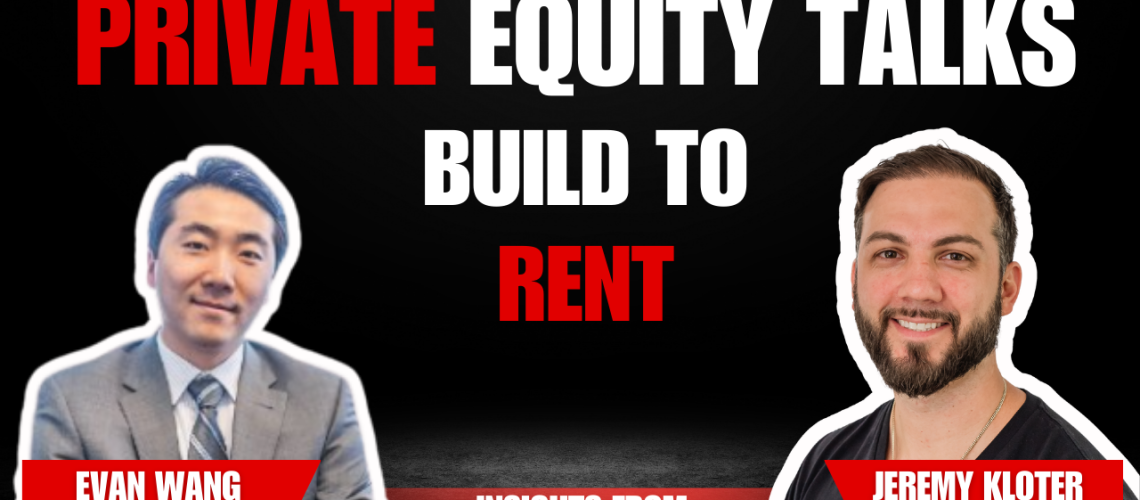
In a recent episode of the Tampa Bay Veteran Investor Show, host Jeremy Kloter sat down with Evan Wang, a powerhouse in the Tampa development scene and founder of MYI Construction. Evan shared a masterclass on why investors are pivoting from flips to Build-to-Rent (BTR) and how to avoid the “hidden” traps that sink new construction budgets.
Watch this episode here
From Financial Advisor to Developer: The Evan Wang Story
Evan didn’t start with a hammer in his hand. He began his career at Morgan Stanley, pitching traditional portfolios to high-net-worth individuals. He noticed a trend: investors weren’t excited by the S&P 500; they were hungry for real estate.
After diving into the industry and raising $1.5 million for a hotel deal in just three weeks, Evan realized the “secret sauce” wasn’t just in finding the land—it was in controlling the build. Today, his firm is vertically integrated, combining private equity with in-house construction to provide a seamless experience for investors.
The Reality of Construction Costs: Post-COVID Evolution
If you haven’t built a house since 2019, your old spreadsheets are obsolete. Evan points out that pre-COVID, you could build a 2,000–3,000 sq. ft. home for roughly $90 per square foot (internal cost).
Today? That number has shifted dramatically.
Why Prices Haven’t Dropped
-
Material Creep: While lumber has stabilized, concrete prices have nearly doubled, jumping from $90 to as much as $180 per yard.
-
Labor Inflation: Even when material costs dipped slightly post-pandemic, labor costs rose to fill the gap.
-
The “Luxury” Push: High construction costs are forcing developers out of the “affordable” space and into the luxury market, simply because that’s the only place the margins work when hiring third-party builders.
Strategic Advantage: The Build-to-Rent Model
While many developers chase the “big hit” of a luxury sale, Evan and Jeremy emphasize a more conservative, “boring” strategy: Build-to-Rent.
“We are very conservative. We only build to rent. It attracts retirees and investors who want stability over gambling. We might not win as ‘big’ when the economy is booming, but we don’t bleed out when a $2 million home sits on the market for 300 days.” — Evan Wang
3 Hidden Traps for New Investors
If you are transitionining from “Renovator” to “Builder,” Evan warns of three things that often catch investors with their “pants down”:
1. Impact Fees
Often misunderstood as a simple tax, an Impact Fee is a payment to the city for the added stress your new building puts on schools, parks, and sewers. In Tampa, this can range from $12,000 to $18,000 per unit.
-
Pro Tip: Look for “demo” opportunities. If you tear down an existing 1,000 sq. ft. home to build a 2,000 sq. ft. home, you only pay impact fees on the difference.
2. Utility Hookups (The Silent Budget Killer)
Buying empty land sounds great until you see the bill for water meters and sewer laterals.
-
Tampa: Water meters can cost $3,000–$5,000.
-
St. Pete: Sewer laterals can run up to $9,000. Buying a lot with an existing structure (even a shack) usually means these connections are already paid for.
3. The “Private Provider” Shortcut
Cities like Tampa and St. Pete are often understaffed, leading to permit delays. Evan recommends using Private Providers for plan reviews and inspections.
-
The Benefit: It can save you 30+ days in the permitting phase.
-
The Caveat: Private providers can review your building plans, but the city must still review your Site Plan.
How to Scale: The “Triad” of Design
One of the biggest mistakes investors make is hiring an architect and a General Contractor (GC) separately without communication.
The result? Over-design. Architects want to build art; GCs want to build boxes. Evan suggests a collaborative approach from Day 1. By having the GC “value engineer” the plans, you can avoid unnecessary costs like:
-
Complex HVAC: Do you really need two systems for a single-family home?
-
Custom Windows: Standard 3×5 windows are significantly cheaper and easier to source.
-
Truss Engineering: Get your truss company involved before the architect finishes the plans to ensure the weight loads are structurally sound.
The “Secret Sauce”: Speed and Liquidity
In the construction world, time is more than money—it’s survival. Evan’s firm pays subcontractors within 3–4 days of work completion. This “priority treatment” ensures his projects don’t stall.
For investors, this means you need Liquidity. Most banks won’t release your first draw until the slab is poured. You should be prepared to front about 25% of the construction cost to keep the momentum going before the bank starts reimbursing you.
The Bottom Line: Education Over Ego
Transitioning into development is high-risk, high-reward. Evan offers a unique consulting program where he teaches investors how to manage their own builds, providing access to his “black book” of vetted subs and suppliers.
Whether you are looking to build your first ADU (Accessory Dwelling Unit) in St. Pete or a townhouse project in Tampa, the key is to rely on the professionals. Don’t pay for your education through expensive mistakes on-site.
Ready to build in Tampa Bay?
If you have a lot you’re looking to develop or need a construction consultation to see if your numbers actually work, reach out to Evan Wang or the Tampa Bay Veteran Investor team today.
Follow us on our social networks
Jeremy Kloter Instagram: @JeremyKloter
OFPM Instagram: @OutFastPropertyManagement
You Tube: @OutFastPropertyMgmt